James Peterson

Product Leader with experience in both management & design. Proven success across 7+ different industries.

James Peterson

Product Leader with experience in both management & design. Proven success across 7+ different industries.

James Peterson

Product Leader with experience in both management & design. Proven success across 7+ different industries.

PICLO

WEB UX/UI │ SAAS │ ENERGY

Piclo Operations & Settlement Modules
The Problem

After securing a contract with ENEL, Italy's national entity for electricity, to become their first local flexibility solution, Piclo now had to deliver new functionality that didn't yet exist.

I worked as the sole product designer on the project, tasked with immersing myself deep within UK and European nascent flexibility markets and then designing the part of the Piclo product that would allow us to say we were truly end-to-end.

This encomapssed two new modules, Operations and Settlement, which would allow system operators and flexible service providers to finally undertake dispatching and payments after the market has closed.

Requirements Gathering

Understanding the needs of ENEL, a key European utility partner, was essential during the early development of the modules. I conducted weekly stakeholder interviews with senior electricity infrastructure engineers to define expected outcomes, identify key risks, and align on how these modules would function within a flexibility marketplace.

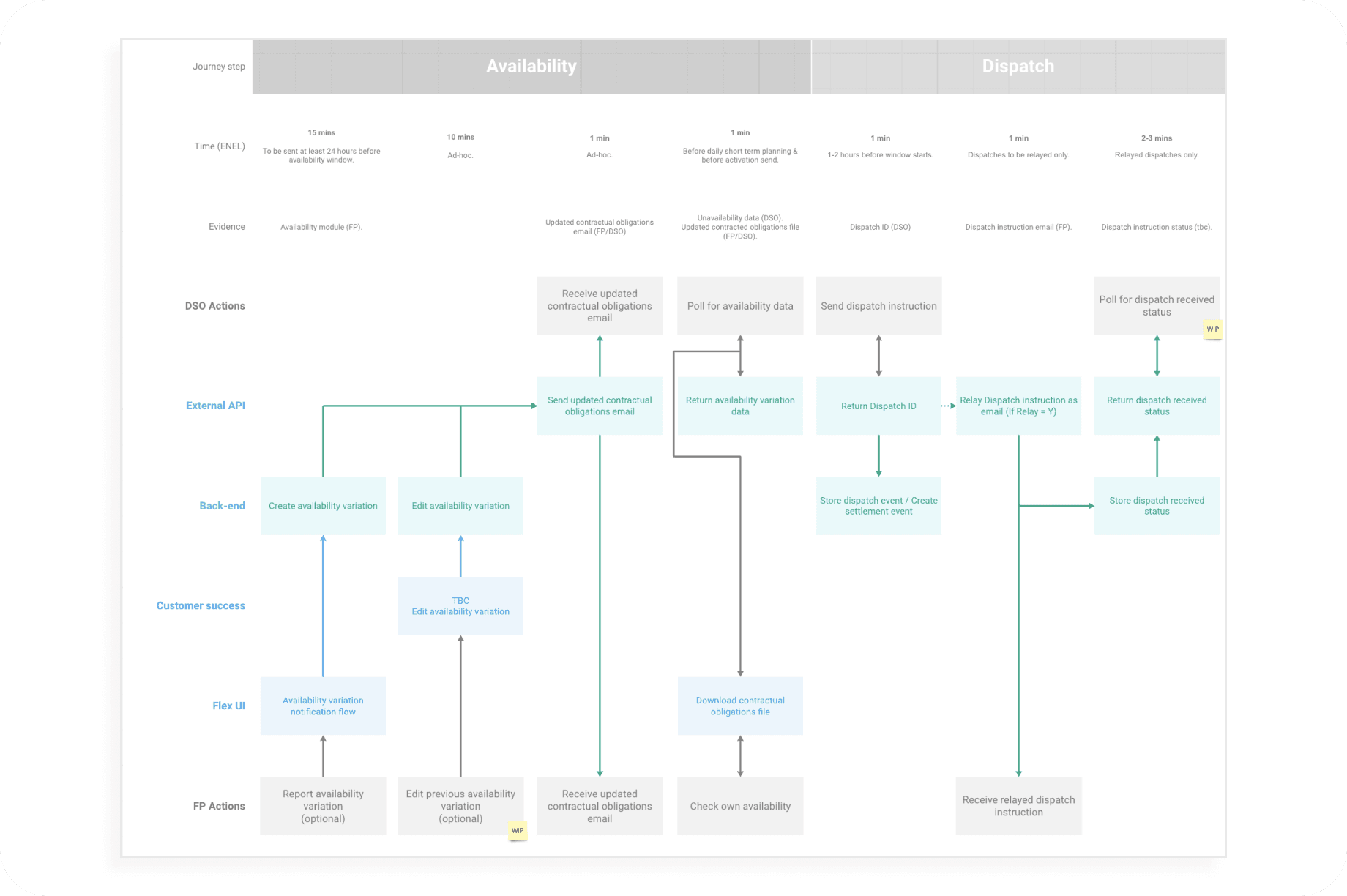
To capture the full picture, I gradually developed an end-to-end journey map and service blueprint that outlined the critical steps both ENEL and prospective flexible service providers (FSPs) would need to follow to engage with the platform effectively.

After securing a contract with ENEL (Italy's national entity for electricity) to become their local flexibility solution, I worked as the sole designer to bring Piclo's operations & settlement modules to life.

These two new modules would allow system operators and flexible service providers to undertake the full flexibility end to end process within Piclo.

Stakeholder Interviews

Understanding the needs of ENEL, a key European utility partner, was essential during the early development of Piclo’s operations and settlement modules. I conducted weekly discovery sessions with senior electricity infrastructure engineers to define expected outcomes, identify key risks, and align on how these modules would function within a flexibility marketplace.

To capture the full picture, I gradually developed an end-to-end journey map that outlined the critical steps both ENEL and prospective flexible service providers (FSPs) would need to follow to engage with the platform effectively.

In parallel, Piclo was working to mature its API offering. I was brought in to support the integrations team by identifying where new endpoints could be deployed, and by contributing to their design to ensure ease of use, scalability, and relevance to market needs.

Navigating the UK Flexibility Standards

To ensure our product offering could scale across regions, I became an in-house expert on the UK’s flexibility market structure. This included understanding the various service types (such as dynamic, static, and time-bound flexibility), market mechanisms, and platform interoperability requirements.

One of the most complex aspects was standardising baseline methodologies across different markets. Each region used different logic to determine what qualified as “normal” energy usage, which in turn affected how delivered flexibility would be measured. By identifying cross-market commonalities, I helped the team confidently implement both nomination and historical baselining approaches that were accepted by all major system operators.

Designing a Simple UI with Maximum Impact

With a tight timeline to onboard ENEL and begin trials, I worked closely with product managers to determine what features would constitute a minimum viable product while still supporting a usable, end-to-end experience for FSPs.

Key features included:

  • Automated dispatch emails to alert FSPs when to provide flexibility services

  • A meter data upload interface so providers could validate service delivery

Settlement reporting tools to help providers understand monthly payment breakdowns
In parallel, Piclo was working to mature its API offering. I was brought in to support the integrations team by identifying where new endpoints could be deployed, and by contributing to their design to ensure ease of use, scalability, and relevance to market needs.

Becoming a Subject Matter Expert

To ensure our product offering could scale across regions, I became an in-house expert on the UK’s flexibility market structure. This included understanding the various service types (such as dynamic, static, and time-bound flexibility), market mechanisms, and platform interoperability requirements.

Early on I realised we required a fundamental change in our object model to cater to the Italian market. ENEL needed fine control over the contractual obligations they dispatched, whereas UK DSO's were happy for Piclo to choose the most economical provider across all obligations. Understanding this requirement, and the underlying motivator, early was critical for the ultimate success of the project.

Another complex aspect I needed to understand fully was baseline methodologies. Each region used different logic to determine what qualified as “normal” energy usage, which in turn affected how delivered flexibility would be measured. By identifying cross-market commonalities, I helped the team confidently implement both nomination and historical baselining approaches that were accepted by all major system operators.

MVP Design

With a tight timeline to onboard ENEL and begin trials, I worked closely with product managers to determine what features would constitute a minimum viable product while still supporting a usable, end-to-end experience for FSPs.

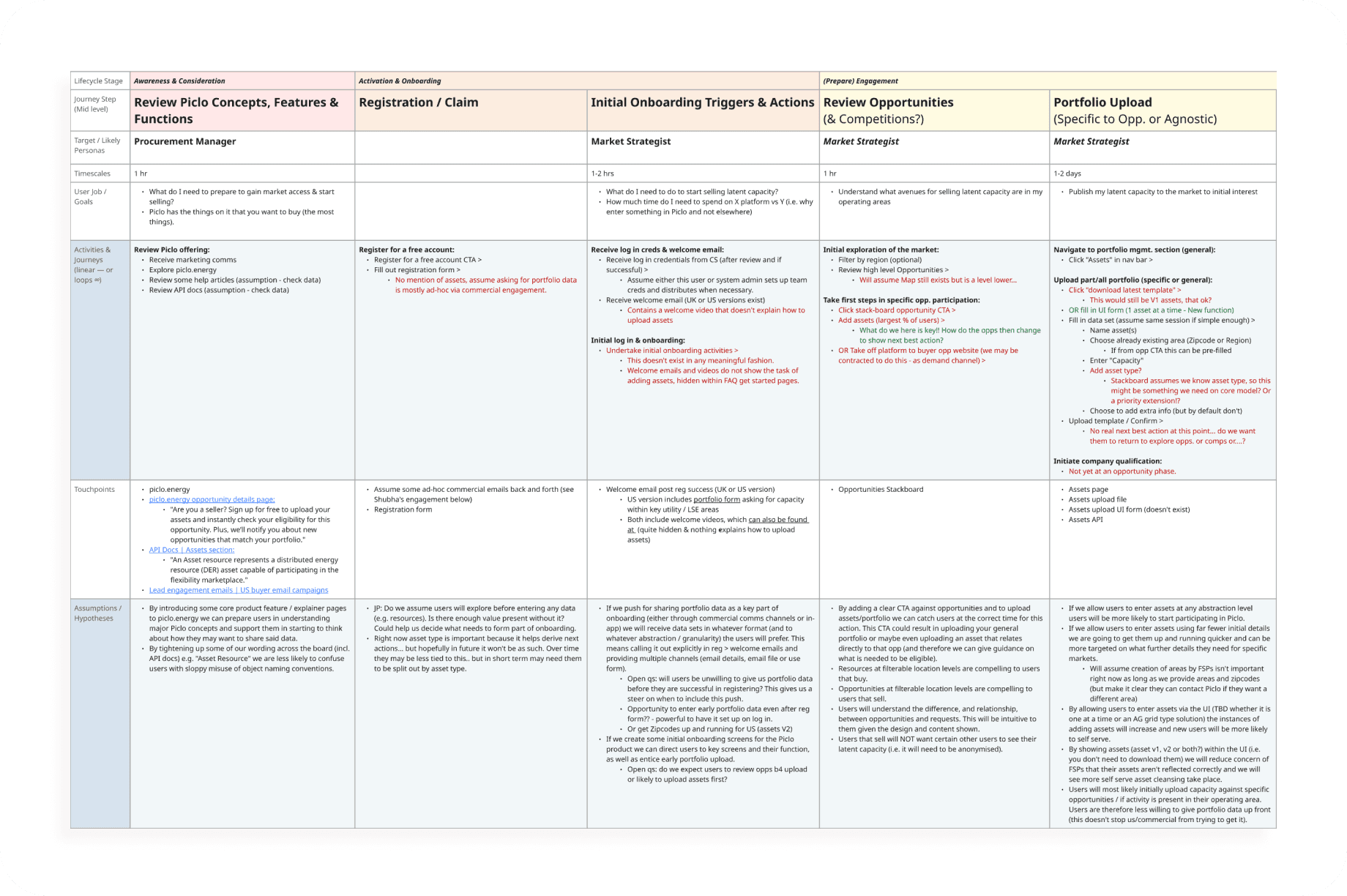
I produced simple personas to identify broad FSP types. Key criteria by which they differed were portfolio size, management structure and whether flexibility was a core profit generator for the organisation or just the "cherry on top."

Key cross-persona functions required included:

  • Automated dispatch emails to alert FSPs when to provide flexibility services

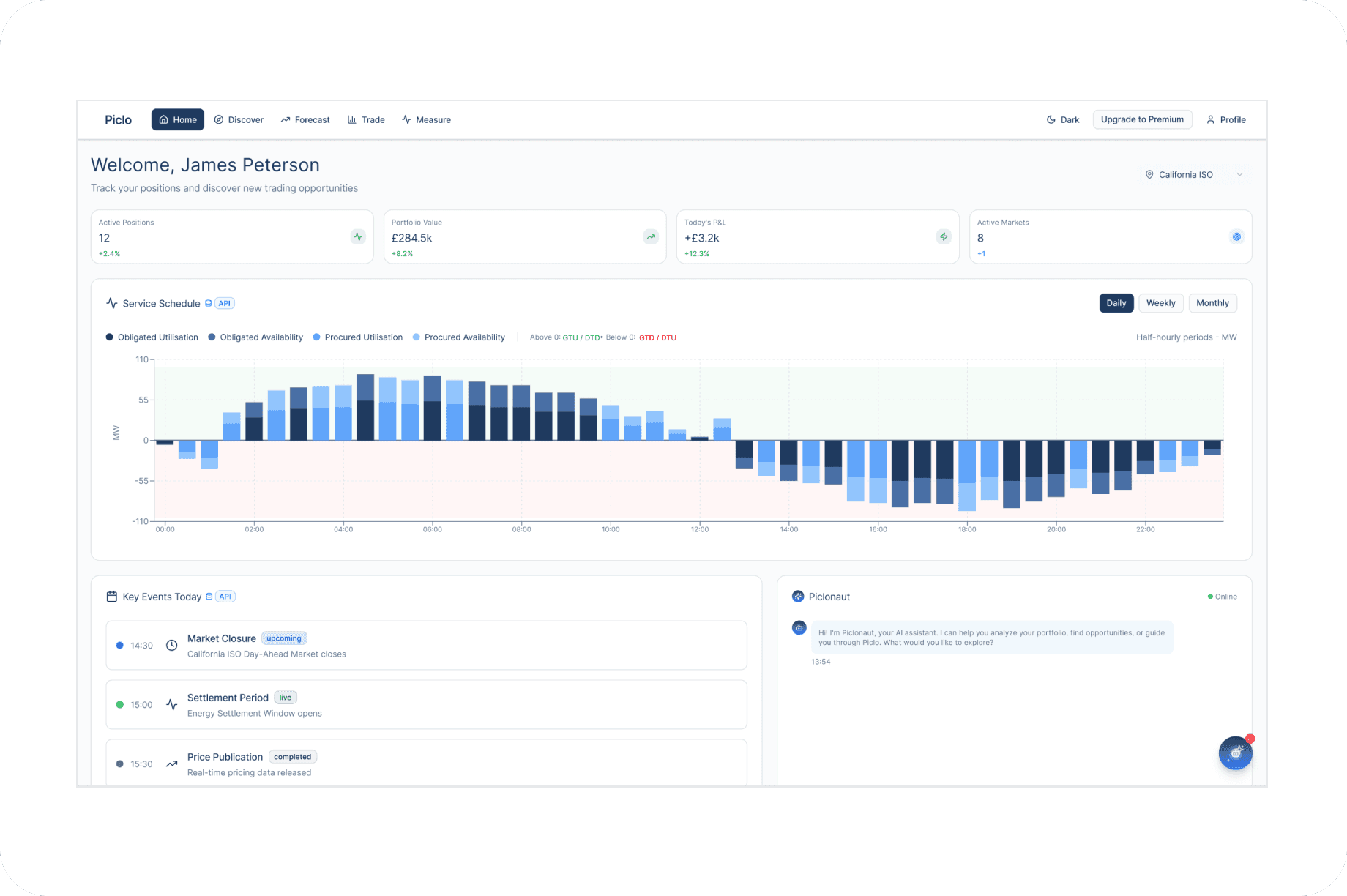
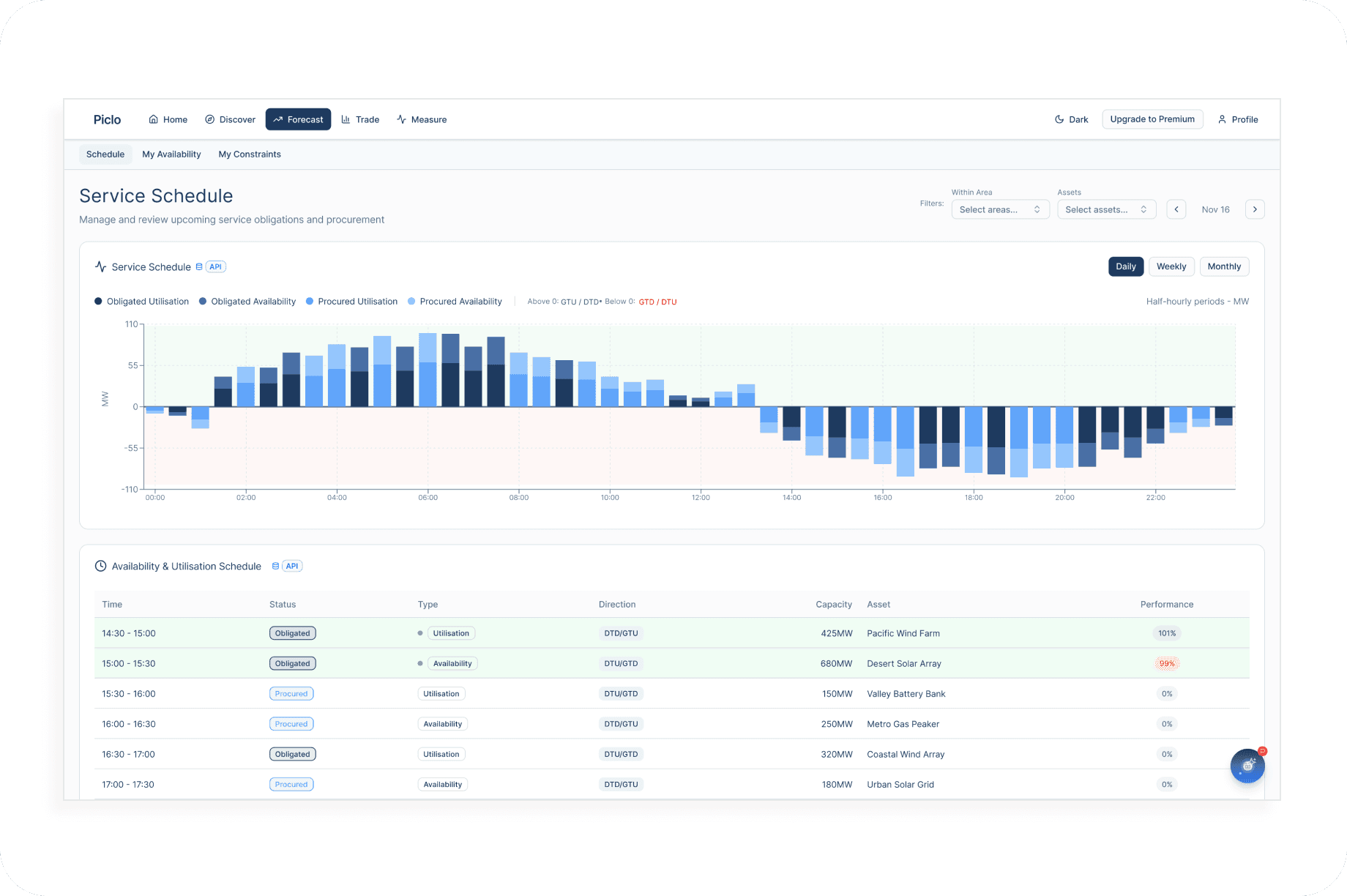
  • A simple service schedule interface to quickly identify upcoming delivery requirements

  • A meter data upload interface so providers could validate service delivery

  • Settlement reporting tools to help providers understand monthly payment breakdowns
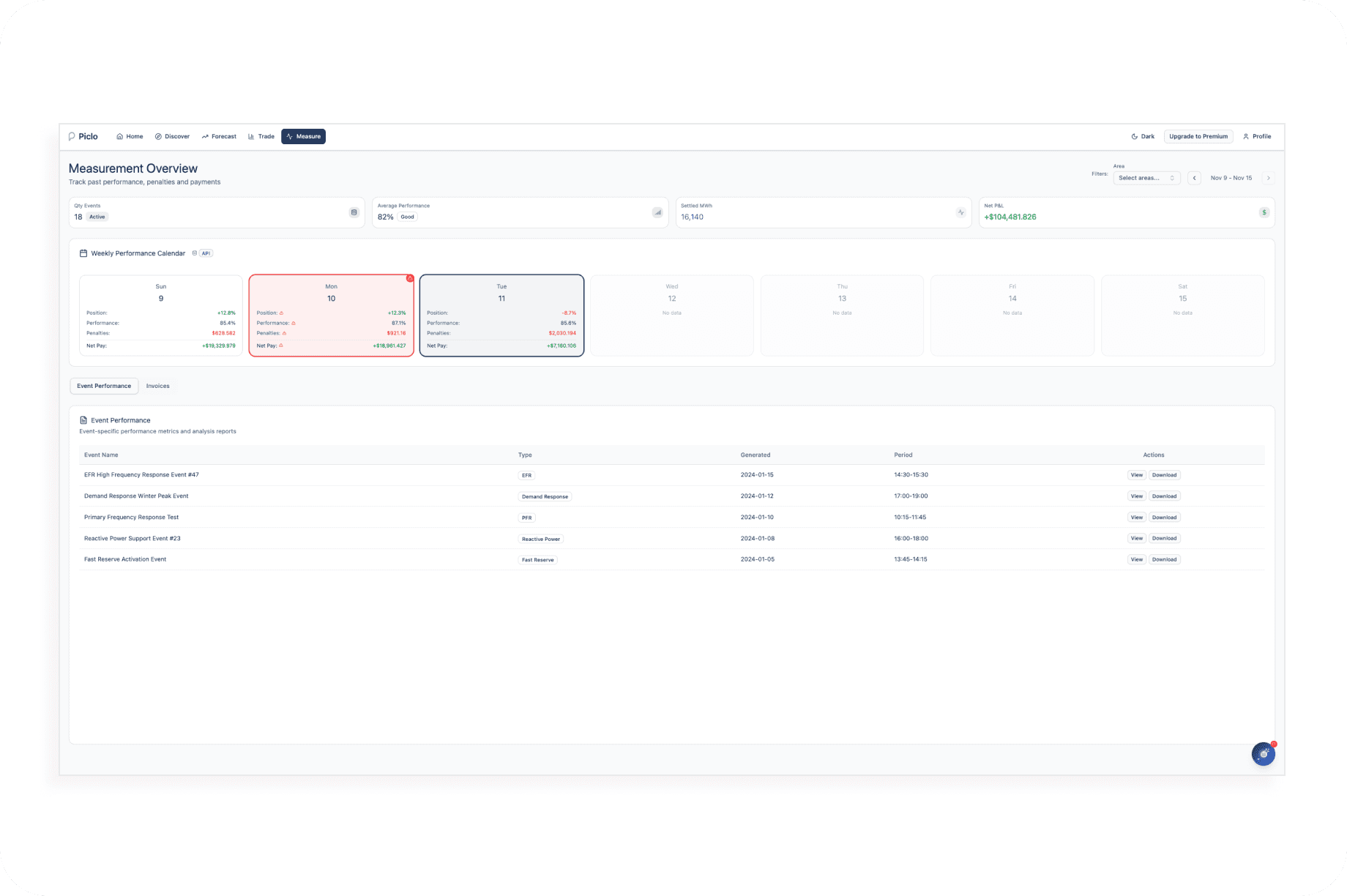
Despite the technical complexity behind these workflows, I focused on creating a simple and accessible UI that could scale as the product matured.

Understanding underlying user frustrations beyond digital touch-points was imperative. For example, although I had designer a meter data upload template that would work for many different asset types, we kept hearing that just getting hold of meter data was difficult.

I worked with multiple FSP's to discuss how Piclo could help alleviate this concern, from pushing out the meter data upload deadline, to providing services whereby Piclo retrieves the data from third parties on behalf of the FSP.

Growing the Customer Base

As ENEL trials progressed, Piclo pursued a new opportunity, National Grid ESO’s Local Constraint Market (LCM) tender. I played a key role in ensuring the success of this strategic project.

My responsibilities included:

  • Providing detailed responses to technical elements of the tender

  • Designing and building the prototype used for the live demo

  • Being part of the on-site pitch team at National Grid's offices in Warwick

Following our successful tender win, I continued to collaborate directly with National Grid’s team, even spending the day in their national control room in Workingham. identifying ways to streamline their day-to-day operations and save time through better design.
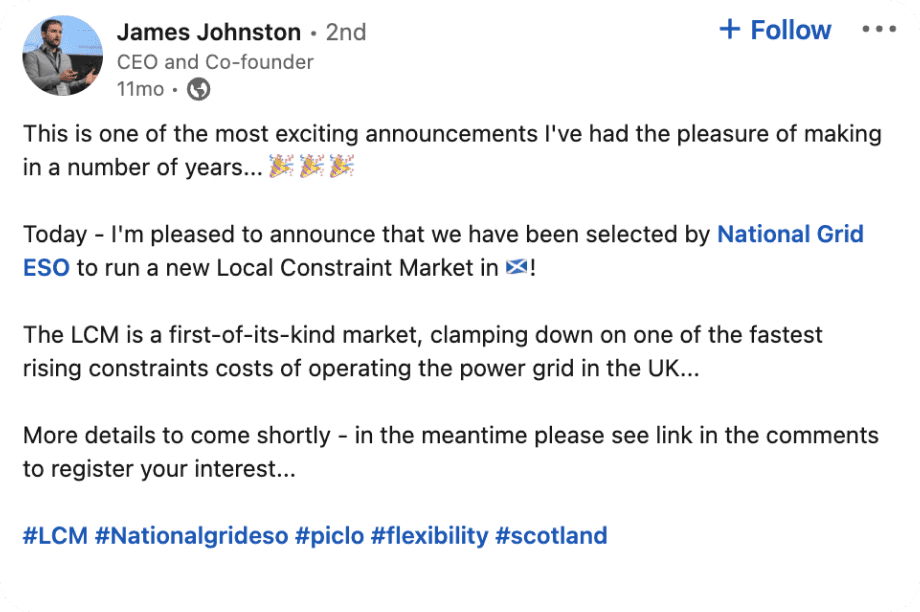
68,000+

DISPATCH EVENTS

FACILITATED

68,000+

DISPATCH EVENTS

FACILITATED

68,000+

DISPATCH EVENTS

FACILITATED

3YR

CONTRACT

EXTENSION

3YR

CONTRACT

EXTENSION

3YR

CONTRACT

EXTENSION